How Body Doubling Breaks the Spell of Procrastination
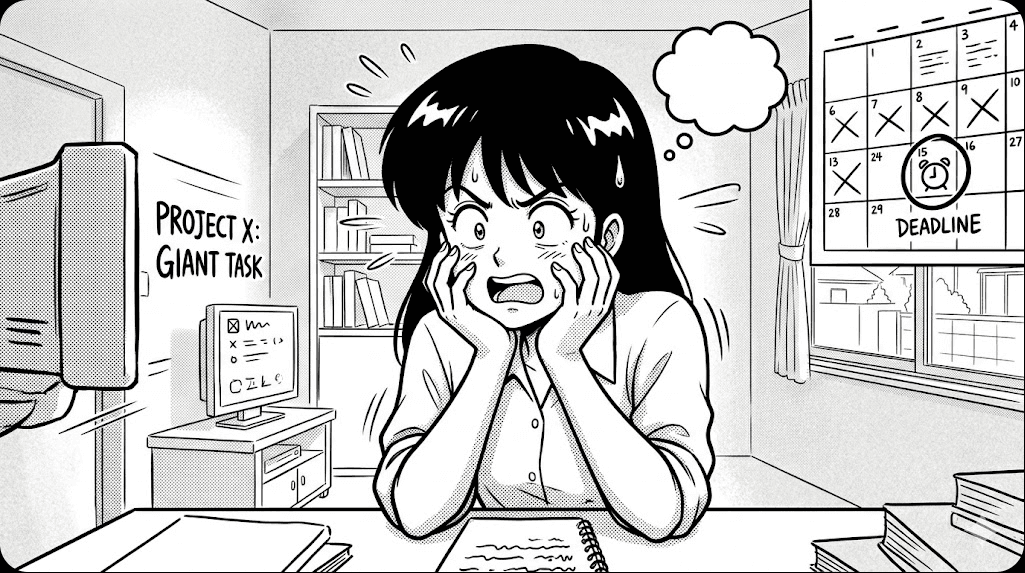
Most of us are familiar with the term 'Task Paralysis', though we are not always familiar with the mechanism behind it.
Task Paralysis: This occurs when the executive functions of the brain become overwhelmed by the perceived magnitude or ambiguity of a project. Instead of starting, we freeze. It is a protective measure by the brain to avoid the stress of an unclear path—but it leaves our goals stranded.
Fortunately, behavioural science offers a potent antidote: Body Doubling.
1. The Anatomy of the "Procrastination Spell"
Procrastination is rarely a character flaw or a lack of discipline. More often, it is a biological "lock."
For individuals with ADHD or high levels of executive dysfunction, tasks are often processed in the amygdala—the brain's emotional center. A complex or boring task is perceived as a "threat," triggering a subtle "freeze" response. This results in a lack of activation energy—the initial spark needed to transition from rest to action.
When you are alone, the Shame Spiral takes over. You feel guilty for not starting, which increases your stress, which makes the task feel even more threatening, leading to further avoidance. Body doubling breaks this loop by introducing a neutral, non-judgmental presence that signals to your brain: "You are safe. We are just working."
2. The Science: Why the Presence of Another Works
Why does simply having someone else in the "room" change your brain's ability to focus? The answer lies in three key psychological principles.
Mirror Neurons & The Chameleon Effect
Our brains contain mirror neurons, which fire both when we perform an action and when we observe someone else performing that same action. When you are near someone who is focused, your mirror neurons begin to "mimic" that state. This allows you to essentially borrow their focus, lowering the mental effort required to stay on task.
Social Facilitation (The Mere Presence Effect)
Psychology defines Social Facilitation as the tendency for people to perform differently when in the presence of others. The "mere presence" of another person creates a level of physiological arousal that makes us more alert. It acts as a social anchor, keeping you grounded in the present moment and preventing the "drift" into distractions.
Dopamine & Co-Regulation
Procrastination is often a search for a missing neurotransmitter: Dopamine. Working alone on a boring task is a low-dopamine activity. However, the presence of another human can stimulate small releases of dopamine and oxytocin. This co-regulation lowers the perceived "pain" of the task, providing the neurological reward necessary to sustain effort.
3. Body Doubling vs. Accountability: The Crucial Difference
It’s important to distinguish body doubling from traditional accountability.
- Accountability is focused on the result. A partner asks, "Did you do it?" This can sometimes backfire by increasing performance anxiety.
- Body Doubling is focused on the process. A partner simply says, "I am here while you do it."
Body doubling provides support without scrutiny. It is about being witnessed, which provides comfort, rather than being watched, which provides pressure.
4. Categorizing the Methods: How to Double
There is no "one size fits all" for body doubling. Depending on your task, you might choose:
- The Passive Double: A partner or roommate in the same room doing something unrelated.
- The Virtual Double: Using video calls or digital platforms to share a workspace across distances.
- The Ambient Double: Working in a library or coffee shop, utilizing the collective focus of a crowd.
- The Task-Specific Double: Having someone physically present for a specific, daunting chore—like someone sitting in the kitchen while you tackle the dishes.
5. The "Pro Protocol": How to Guarantee Success
To ensure your session doesn't devolve into a three-hour chat, follow this "Pre-Flight Checklist":
- Declare the Mission: Explicitly state your goal. "In this hour, I am finishing the project proposal."
- Set the "Quiet Rule": Agree on when it's okay to talk.
- Visual Connection: Seeing the other person’s "working posture" is the visual trigger your brain needs.
- The "Check-Out": End by stating what you accomplished to close the "open loop" in your brain.
How AimHigh Automates the Body Doubling Effect
At AimHigh , we’ve taken these psychological principles and built them into the core of our platform. We know that finding a body double on demand isn't always easy, so we created a structured environment to facilitate the "Mirror Neuron" effect naturally.
- Weekly Sprints & Teaming Up: AimHigh pairs you with another user for a week-long sprint. This creates a consistent "social anchor," giving you a dedicated partner who is in the trenches with you.
- Activity Visibility: By having visibility over each other's habits and tasks, you experience the "Mere Presence Effect" digitally. You aren't just working in a vacuum; you are part of a shared productivity stream.
- Micro-Co-Regulation: Through in-app chat and the ability to post emojis to each other's activities, AimHigh provides the dopamine hits needed to stay motivated. A simple "thumbs up" on a completed task acts as a social reward, breaking the shame spiral and reinforcing positive behavior.
Body doubling isn't a sign of weakness; it is a sophisticated way to manage a brain that struggles with self-regulation. With AimHigh, you never have to face "the wall of awful" alone.
The spell of procrastination isn't broken by willpower; it’s broken by connection.
Ready to break the spell?
Don't wait for "the right mood" to strike. Find a partner, shrink your tasks, and start your first sprint at AimHigh.life .
Ready to transform your productivity?
Join AimHigh.life and find an accountability partner to help you achieve your goals.